Washington Should Demand Accountability from Libya’s Beleagured Parliament
This op-ed was published by the Atlantic Council on April 16, 2015
With seven months left in its mandate, Libya’s House of Representatives (House) in Tobruk has sent a high-level delegation to Washington this week. Critics of the House continue to demand greater accountability from Libya’s parliament amid mounting concerns of incompetence and corruption as Libya faces a growing threat from the Islamic State (ISIS or ISIL) and inches closer to an all-out civil war. Washington should emphasize to Libyan parliamentarians the need for more transparency and responsiveness to their electorate. US officials must urge them to engage with adversaries to negotiate a political solution to Libya’s extremism challenges.
On August 4, 2014 the House replaced its predecessor, the General National Congress (GNC), whose legacy was marred by controversy. In the run up to elections, House candidates promised to restore confidence in the country’s highest authority with improved performance and effective policy. House elections witnessed a modest voter turnout: roughly 900,000 Libyans (out of 2.8 million registered voters) participated in the elections. One House member secured a seat in the legislative body by winning a mere twelve votes—hardly a landslide victory.
The House’s first order of business was to change the location of parliamentary sessions from Benghazi to Tobruk for security reasons. The relocation contradicted the Constitutional Declaration and resulted in the boycott of thirty elected members. Critics accused the House of circumventing the process outlined by the Constitutional Declaration, which represents the only viable post-Qaddafi legal reference absent a constitution. The House’s indifference to calls for reconciliation with boycotting members only served to exacerbate the parliament’s increasingly unsettling public image and deepened the discord within Libya.
The new legislative body took a step backward from its predecessor with respect to transparency by disallowing televised coverage of its sessions. It made no effort to disclose voting records of members, many of whom reportedly continue to be outside of the country while House votes on legislation. In a recent interview, Prime Minister Abdullah Thinni, a close ally of House, admitted that House members pressured him to appoint ministers to his cabinet based solely on tribal loyalties. According to Thinni, sixty House members signed a letter demanding the appointment of a business mogul—who paid for the costs of transferring House sessions—to Tobruk to a highly sought-after governmental post.
Libya’s former intelligence chief, Salem Hassi, detailed systematic and possibly willful negligence of security dangers by Libyan parliament. In a lengthy fifteen-page letter to the House President, Hassi accused the Libyan parliament of mishandling security reports, ignoring warnings about impending threats, and allowing regional players to influence security policy. Hassi has repeatedly said that he was prevented from debriefing House members and when sacked, his post was left vacant for six weeks before House leadership requested he return to his post. He publicly declined the offer.
Perhaps one of the House’s most damaging legacies has been its blessing of and cooperation with Operation Dignity, a military offensive launched in May 2014 by then-retired General Khalifa Haftar. Promising to bring an end to Benghazi’s spree of assassinations, which claimed the lives of more than 600 security personnel and activists, Operation Dignity attracted the support of many Benghazi residents who felt let down by the inaction of Libya’s government toward the unraveling security nightmare. Operation Dignity, however, has employed unsavory tactics against suspected terrorists—a term that has encompassed all Islamists, their sympathizers, and even relatives of the involved militia groups fighting Haftar and his aligned forces.
Not only has Operation Dignity failed to recapture Benghazi since May, its indiscriminate shelling of largely civilian areas has turned large swathes of Libya’s second largest city into a ghost town. Forces loyal to Operation Dignity are accused of extrajudicial arrests and kidnappings, burning of opponents’ homes, and what a senior Obama administration official characterized as “vigilante” tactics. Prisons run by Operation Dignity officers remain a black hole escaping scrutiny and supervision. In March 2015, a report by the United Nations on human rights defenders in Libya detailed cases of human rights violations carried out by Operation Dignity and its rivals alike. In particular, it points out the kidnapping and continued imprisonment of a Benghazi prosecutor investigating killing of Libyan activist Salwa Abughaighis. Forces loyal to Operation Dignity allegedly arrested prosecutor Abdel Nasser Al-Jaroushi in October, whom they placed in the notorious Gernada Prison without due process of law. To date, Al-Jaroushi has not been charged with a crime and the Minister of Justice has not responded to continued requests from the UN for answers.
Libya’s House of Representatives, the country’s highest and internationally recognized authority granted a carte blanche for Operation Dignity without outlining a code of conduct governing operations, thus opening floodgate for systematic violations under pretext of tackling an “unconventional enemy.” In addition, Operation Dignity has attracted former regime soldiers and officers to its ranks—even those implicated in terrorist acts. One such case is that of Mohamed Bennayel captured this week by Dawn forces, a rival of Operation Dignity. Bennayel has been implicated and wanted for a number of terrorist plots, including the attempted assassinations of Abdou Diouf, the former President of Senegal, and Hedi Nouira, the former Prime Minister of Tunisia.
Operation Dignity has also actively pursued aggressive tactics against its rivals in what some may interpret as a discreet effort to derail UN-led peace talks in Geneva and Morocco. The Libyan parliament’s response to a long list of criticisms is to simply and repeatedly state that the House is the only internationally recognized authority in the country. Such recognition, however, comes with commitment to accountability and responsible governance.
The United States and Libya’s international partners have consistently called for dialogue and reconciliation among Libya’s key players to create a strong unity government capable of tackling extremism; Libya’s international partners have asserted unequivocally that a military solution is a disastrous option in a country fraught with Qaddafi-era weapons and non-existent rules of engagement. The House’s participation in UN-mediated dialogue talks have been reluctant and half-hearted at best. As the Washington community meets with the House’s delegation, it should emphasize the need to address its problematic pattern of secretive and incompetent practices. It should remind Libyan parliament that it must abandon its divisive stance toward its adversaries and that relying on force alone to fight extremism is not only ineffective, but it’s not sustainable. The House still has an opportunity to drive positive change during Libya’s tumultuous times. Its Washington hosts should push it to assume that role.
Before Jamal Khashoggi, There was my uncle
This blog was published by the Arab Tyrant Manual on March 25, 2019
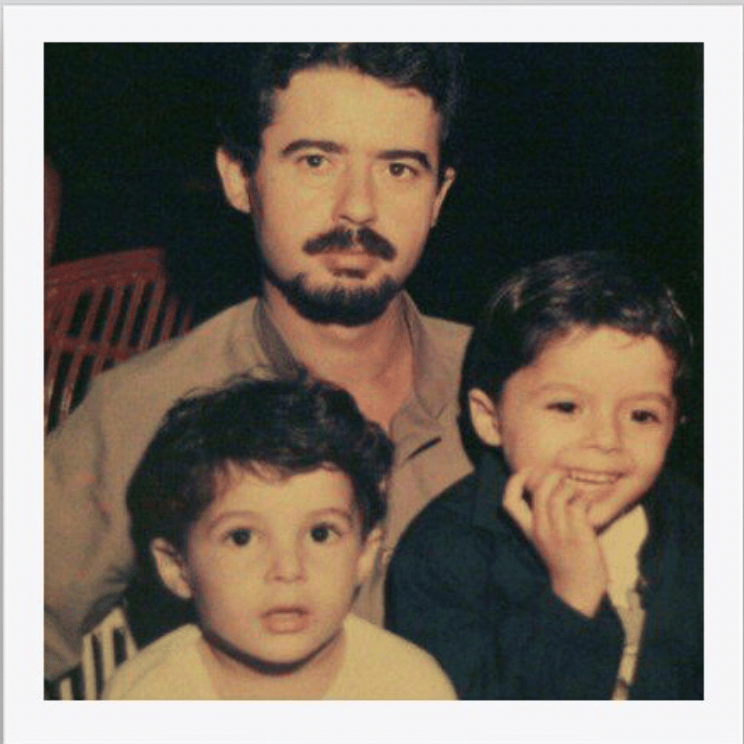
This past week marked 29 years since my uncle, Izzat Al-Magariaf, disappeared.
A Libyan dissident, Uncle Izzat resided with his family in Cairo in the 1980’s, as my family and many others seeking refuge from Qaddafi’s persecution did. Sanctuary was afforded to them in Egypt thanks to tenuous relations between the regime of Hosni Mubarak and his hostile neighbor to the west, who Ronald Reagan called the “mad dog of Africa”. Like many Arab regimes irked by Qaddafi’s regional destabilizing antics, Mubarak initially welcomed Libyan opposition figures. But as relations between the Egyptian and Libyan regimes slowly realigned in the late 1980’s, none of us expected what was to come.
On the evening of March 13th, 1990, Colonel Mohammad Hassan from Egyptian General Intelligence showed up at Uncle Izzat’s flat requesting that he accompanies him for routine questioning. Uncle Izzat was not alarmed. He assured his wife and children that he would join them later for dinner at my parents’ home as previously planned. Earlier in the day, my grandmother had reminded my mother of Uncle Izzat’s favorite meal, fasoolia belkarsha. Food was cooked, the table was set and we waited. But Uncle Izzat never showed up.
For months, the Egyptian government denied knowledge of my uncle’s whereabouts. In fact, Mubarak’s regime attempted to lure more Libyan dissidents to meet with high-ranking Egyptian officials to “discuss” the matter, but Libyan dissidents recognized the invitation for what it was – a trap to hand them over to Qaddafi’s regime.
From that point on, things changed for diaspora Libyans in Egypt. It was clear that Qaddafi was seeking rapprochement with his neighbors in an effort to insulate his regime – after all, the regime could not withstand both international and regional isolation. Egypt was a perfect candidate for such rapprochement, as both a regional heavyweight and a hub of Libyan opposition activity.
Mubarak’s regime was happy to oblige. It too sought to put the hostility with Qaddafi to rest, in return for a rewarding collaboration with oil-rich Libya. Libyan opposition members were to be the price. With the stakes so high, many families – including my own – decided to leave Egypt.
Three years later in 1993, Mubarak’s authorities facilitated the kidnapping of Mansur Al-Kekhia, another prominent Libyan dissident. Shortly after, letters from my uncle were smuggled out of Qaddafi’s notorious Abu Selim Prison in Tripoli. The letters didn’t find their way to my family until 2009 though, because the released prisoner who was entrusted with the letters was too afraid to share them with us. Qaddafi was still ruling Libya with an iron fist, and any communication with diaspora Libyans was looked upon with suspicion by the police state.
Letters from Behind the Sun
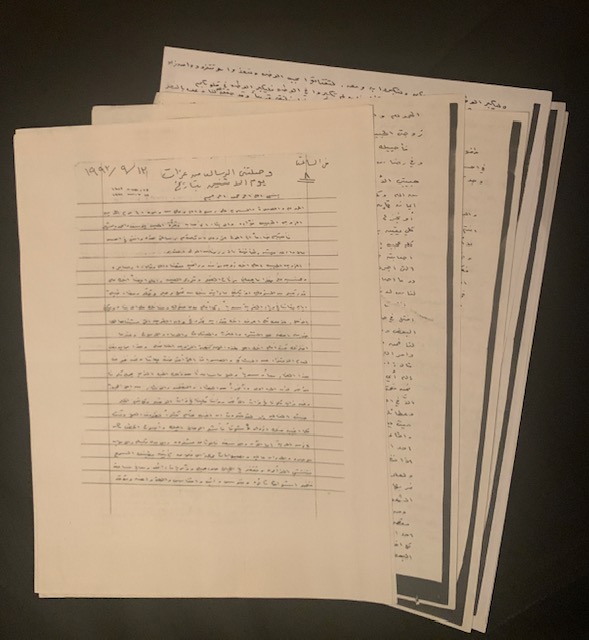
My younger cousins asked me to translate into English for them the newly-received letters from their father. I sat in my home in Virginia looking at the only remaining written words from Uncle Izzat, words that were intended to reach and comfort us in 1993. Nothing had changed in the sixteen years between; we still lived in limbo uncertain of what had happened to him. Our unanswered questions remained so.
It was Uncle Izzat’s handwriting. I tried not to think of the difficult circumstances he must have endured as he wrote the letters. His words were brave, hopeful, and even poetic – declaring at the end of one letter to his wife and children: “As for me, I will never forget any of you. You are of me, and how can I forget myself?” He repeatedly assures us he was in good health and asks that we not be consumed with worry about him.
In his letters, Uncle Izzat detailed his kidnapping at the hands of Mubarak’s authorities, who promptly handed him over to their Libyan counterparts within hours of taking him – contrary to their assertions to us at the time.
At the time he wrote these letters, Uncle Izzat was detained in one of the most notorious prions in the world. We were on the outside, enjoying freedoms and liberties that he was deprived of. But reading his letters, we seemed to have switched roles: He was the one providing words of hope, reminding us not to despair. And we were the ones trying not to fall apart thinking of the worst befalling him. In one letter, he says: “Do not worry about us, for we are in the protection of the Almighty, who never sleeps, and who is closer to us than the blink of an eye.”
Years later, a former guard at Abu Selim Prison told me what befell Uncle Izzat. In April 1996, prison guards informed him that the warden wanted to see him in his office. My uncle never returned to his cell, and was never seen alive again.
The uncertainty surrounding the whereabouts of Uncle Izzat haunted my family for nearly three decades. His youngest son – who was only six weeks old at the time of his father’s kidnapping – is now a twenty nine year old man who has no memories with his father. Those of us who knew him hold on dearly to what we remember of him. I remember a tall, impeccably-dressed, kind and good-humoured man who filled the room with his presence.
It hurts every time I use the past tense in reference to Uncle Izzat , even as I know that the chances of his survival were next to impossible. It pains me that there is no grave to visit to recite a few verses of the Quran in remembrance. We were robbed of any sense of closure.
Time but Little Change
It’s 2019, and I wish I can say that things have changed in the Arab world. The brutal murder of Jamal Khashoggi reminded us all of what autocrats are capable of doing to eliminate dissidents. Both Uncle Izzat and Jamal Khashoggi were men were born in the Arab world in 1950’s, during a time when post-colonial euphoria was dashed by realities of authoritarian rule and military dictatorships. Both men believed in democratic reforms, accountability, and rule of law. And both men were targeted and killed.
Had the killing of Khashoggi not been so horribly botched, or had social media not existed, Khashoggi’s case would have been just another case of forced disappearance in the Arab world. Like Qaddafi, Mohammad bin Salman believes his victims deserve no due process, no mercy, and no dignity in death. Both regimes expected blind obedience, and punished disobedience with unrelenting brutality.
For many years, Qaddafi got away with his crimes against Libyans – in fact, after 2003 he was declared fully rehabilitated in the eyes of his western partners. He paid compensation for victims of his terror attacks abroad, but nobody compensated his victims at home. The world didn’t seem to be bothered that Libyans received no justice or closure.
Today, human rights continue to be sacrificed for the sake of fragile “stability” under dictatorships. The outrage which accompanied the brutal murder of Jamal Khashoggi was warranted, but his murder is not an isolated incident. The avalanche of revelations about Saudi Arabia’s horrendous treatment of reformers and activists in the aftermath of Khashoggi’s murder put a spotlight on the unpleasant reality characterizing Western foreign policy in the region: That autocrats in the region existed for years because their crimes were normalized by Western enablers eager to solidify business contracts and achieve geopolitical goals, while victims languished in their prison cells.
Algerian Victim of Secret Evidence Dr. Anwar Haddam Embraces Freedom
This article appeared in the Jan/Feb 2001 issue of the Washington Report on Middle East Affairs
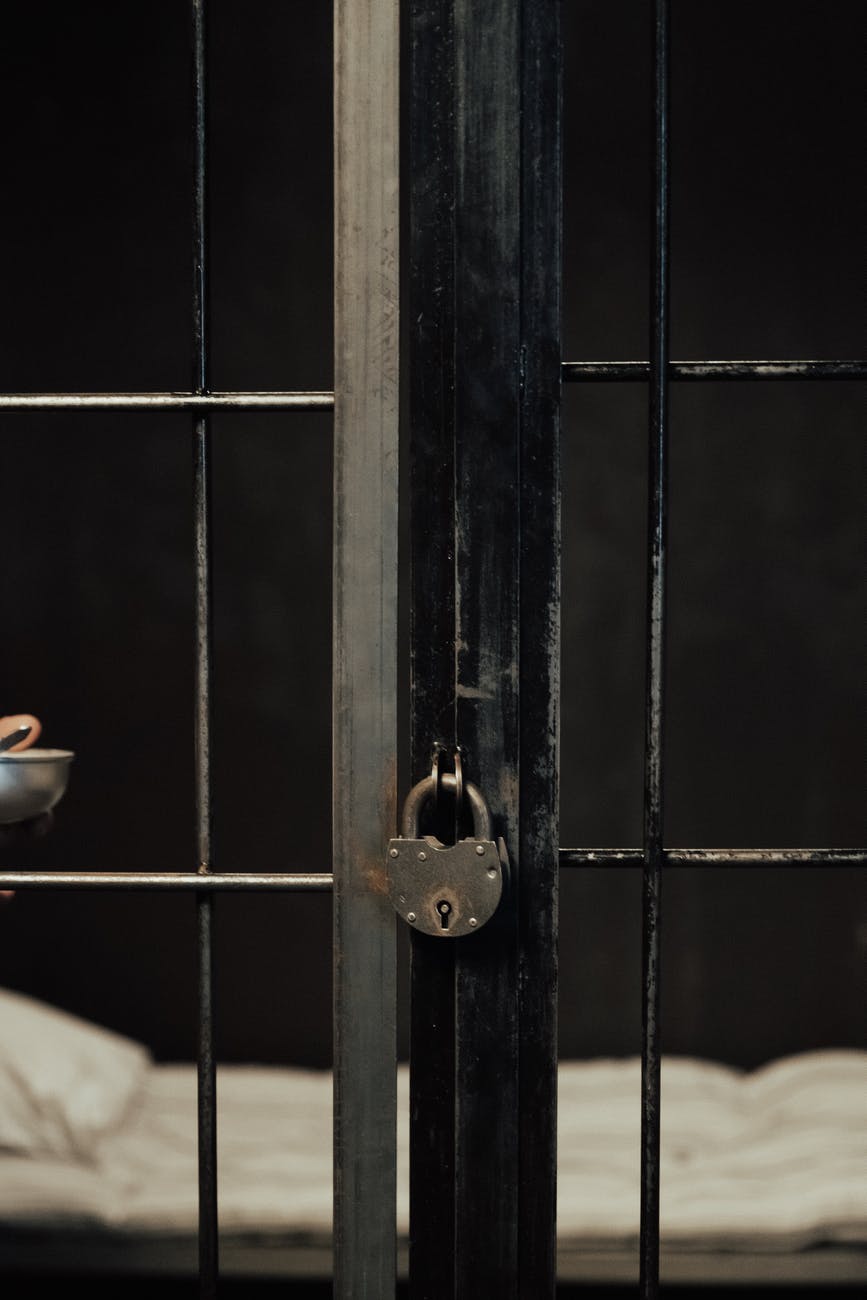
On Dec. 7, Dr. Anwar Haddam, an Algerian national detained under secret evidence, walked out of a Virginia federal prison for the first time in four years—the longest period of detention experienced in the short yet cruel history of secret evidence. Throughout his incarceration, Dr. Haddam was never charged with a crime, nor were he or his lawyers ever given a chance to face the alleged evidence against him.
Dr. Haddam is not a newcomer to the United States. The 45-year-old native and citizen of Algeria studied in the United States for four years while completing his undergraduate work in nuclear physics. Following his return to Algeria in 1984, Dr. Haddam worked as a professor at the University of Science and Technology in Algiers.
For over 20 years, Dr. Haddam was an active member of Algeria’s Islamic Salvation Front (FIS), a popular grass roots political party. In 1991, the FIS won a majority of the popular vote in the first round of Algerian municipal elections, characterized as “democratic” by the U.S. State Department. Voters in his district elected Dr. Haddam to parliament. Before the second round of elections could take place, however, the Algerian army intervened and annulled the elections, arresting FIS members, banning FIS as a political organization, and placing the president under house arrest. Dr. Haddam fled Algeria in March of 1992, and on April 7, 1993 filed for political asylum in the United States.
While awaiting a decision on his application, Dr. Haddam was granted permission to travel abroad on seven different occasions to represent FIS. The INS was in fact well aware of Dr. Haddam’s work as an FIS spokesperson and as the head of the FIS parliamentary delegation in exile. In October 1996, the INS denied Dr. Haddam’s request for asylum. On Dec. 5 his parole status was revoked, and on Dec. 6, 1996 the INS detained him.
The detention began a tedious administrative and legal nightmare in which the INS and the Justice Department used every possible venue provided by secret evidence to stall, obstruct, and delay the release of Dr. Haddam. Instead of gathering sufficient evidence prior to making an arrest, as is customary, the INS held Haddam in prison for four years while it attempted to put together a loose case. In the absence of competent evidence, the INS resorted to character assassination and defamation of Dr. Haddam under the guise of secret evidence.
The first immigration judge to hear Haddam’s case in July 1997 declined to review the alleged classified information against Dr. Haddam, while nevertheless denying Haddam’s request for political asylum. The judge based his decision on Haddam’s role as FIS spokesperson, and specifically on an alleged affiliation between FIS and the Armed Islamic Group (GIA)—an affiliation which was never proven and which Dr. Haddam fiercely denied.
Another immigration judge agreed to consider the classified evidence against Haddam. Upon reviewing the evidence, in September, 1998 the immigration judge found no evidence validating the government’s claim that Dr. Haddam was a “persecutor of others,” and found instead that Dr. Haddam was statutorily eligible for a grant of asylum.
The case was referred to yet another judge, however, for further review of the relevance of the evidence. While this judge allowed the INS to introduce additional classified information, Haddam and his lawyers were refused a chance to see any of the evidence in order to contest it.
According to Kit Gage, national coordinator of the National Coalition to Protect Political Freedoms, “evidence” produced by the government in secret evidence cases is usually hearsay and unsubstantiated innuendoes aimed at tarnishing the defendant’s image and influencing the judge. Such information is easily rebutted, she contends, but is conveniently kept secret from the defendant and his lawyer.
The third judge’s May 1999 ruling, as a result, denied Haddam’s application for asylum on statutory and discretionary grounds. Furthermore, although the INS agreed in theory to recommendations by various judges to deport Dr. Haddam to a third country, to which he in fact acquiesced, it delayed his release indefinitely.
Significantly, all of the judges who considered the case consistently acknowledged that Dr. Haddam should not be deported back to Algeria, where he has been sentenced to execution. Ironically, however, the basis for judging Dr. Haddam a threat to U.S. national security was not necessarily his alleged involvement in terrorist acts—since the INS never was able to prove this. Other rationalizations, therefore, were devised. One judge, for example, who ruled against Dr. Haddam, acknowledged that he had a “well-founded fear of persecution.” The judge asserted, however, that because Haddam is wanted by the Algerian government, he could potentially become the target of future attacks while residing in the U.S. This, she contended, could pose a threat to others. In essence, then, it was Haddam’s status as a human rights victim of the Algerian government, and not his own actions, that justified his continued incarceration.
On Nov. 30, 2000 the Board of Immigration Appeals found nothing in the government’s evidence to justify the continued detention of Dr. Haddam. The judge not only declared Dr. Haddam eligible for asylum, but also found no evidence that he posed any threat to the security of the United States. In fact, the judge found that Dr. Haddam deserves a “favorable exercise of discretion.”
According to Malea Qiblan, Dr. Haddam’s lawyer, “The court’s decision vindicates Dr. Haddam, for the court unanimously declared that the INS did not produce a shred of competent evidence to substantiate any claims against him.”
Despite INS protests and pending appeals, Dr. Anwar Haddam was set free four years and one day after he was first imprisoned.
Dr. Haddam’s experience sheds light on the raw injustice permitted under the guise of protecting national security. In practice, secret evidence has been used almost exclusively against Arab and Muslim Americans, prompting many to believe that secret evidence was intended to reinforce existing stereotypes about an alleged “green threat” posed by the country’s Muslim and Arab community.
Jim Zogby, president of the Arab American Institute, views abuses sanctioned by secret evidence as part of a continuing governmental infringement on constitutionally protected rights. He explained that because Arab Americans are considered the weak link in the civil rights struggle, “they have carried the brunt of responsibility of testing and protecting civil liberties.”
“All I wanted was a right to defend my name,” Dr. Haddam said following his release. Asserting that American Muslims should be viewed as a viable and legitimate part of American society, he said that secret evidence was used primarily to intimidate members of the larger Arab-American community from exercising their right of free expression and of association. Many long-time friends were afraid to answer his calls, he said, for fear that they were under surveillance and might be questioned or intimidated by the INS.
Dr. Haddam was joined by representatives of Reps. Tom Campbell and David Bonior as well as of the American-Arab Anti-Discrimination Committee, the Arab American Institute, American Muslim Council, Council on American-Islamic Relations, the Islamic Institute, Minaret Organization, and others. HR 2121, a bill designed to repeal the Anti-Terrorism Act, which authorized secret evidence, is expected to be reintroduced next year for reconsideration in the U.S Congress.
Bush Administration To Libyans: You Can’t Do Better Than Qadafi
This oped was published by Media Line on November 24, 2008
As the Bush administration concludes its final weeks in office, it is taking care of some unfinished business.
At the behest of Secretary of State Condoleezza Rice, the White House is expected to receive Seif Al Islam Qadhafi, son of Libya’s dictator Colonel Muammar Qadhafi. Although the visit remains largely low key, its significance to U.S.-Libyan relations cannot be ignored.
Touted as a reformist, the European-educated Seif is practically considered the heir-apparent of his father who has ruled Libya as a police state since 1969. While Seif Al Islam holds no official post within the Libyan government, the White House insists that the purpose of the visit is to discuss joint Libyan American relations.
Nonetheless, there is little doubt that the visit is part of a behind-the-door deal struck between the White House and Colonel Qadhafi, whereby the former gives its stamp of approval to a likely succession by the younger Qadhafi.
In recent years, Colonel Qadhafi has eagerly sought American recognition for his son as a reward for his cooperation, cooperation that included paying the final installment of compensation to the families of Pan Am Flight 103 terrorist tragedy in which his agents were implicated. While Qadhafi may represent a convenient, albeit imperfect, political ally for America in the region, the American backing has emboldened Qadhafi domestically, ushering in renewed suppression of dissidents and human rights activists.
In dealing with Qadhafi, the Bush administration has advocated the view that the special relationship between the two countries will give the U.S. some added leverage to advocate improved human rights conditions within Libya; however, Libya’s human rights record remains, as it has for decades, dismal.
There is no freedom of speech, press, or assembly in the country. In fact, Qadhafi’s proclamation that “anyone who joins a political party is a traitor to the revolution” has never been repudiated.
Due process of law is alien in Qadhafi’s Libya, where his orders reign supreme above any law or judicial entity. In Stalinist fashion, Qadhafi created Revolutionary Committees to carry out his dirty work, intimidating, torturing and, if need be, killing anyone suspected of opposing him, or as he prefers to be called the “brother leader.”
Today, the Revolutionary Committees continue to operate throughout the country, terrorizing Libyans with complete impunity. They proved indispensable in quelling public demonstrations in Benghazi in February 2006, opening fire on non-violent protesters and killing scores of them.
Libya’s prisons are filled with prisoners of consciousness whose fate hinges on the Qadhafi’s mercy. Apparently, his special relationship with the Americans has not softened his heart toward them.
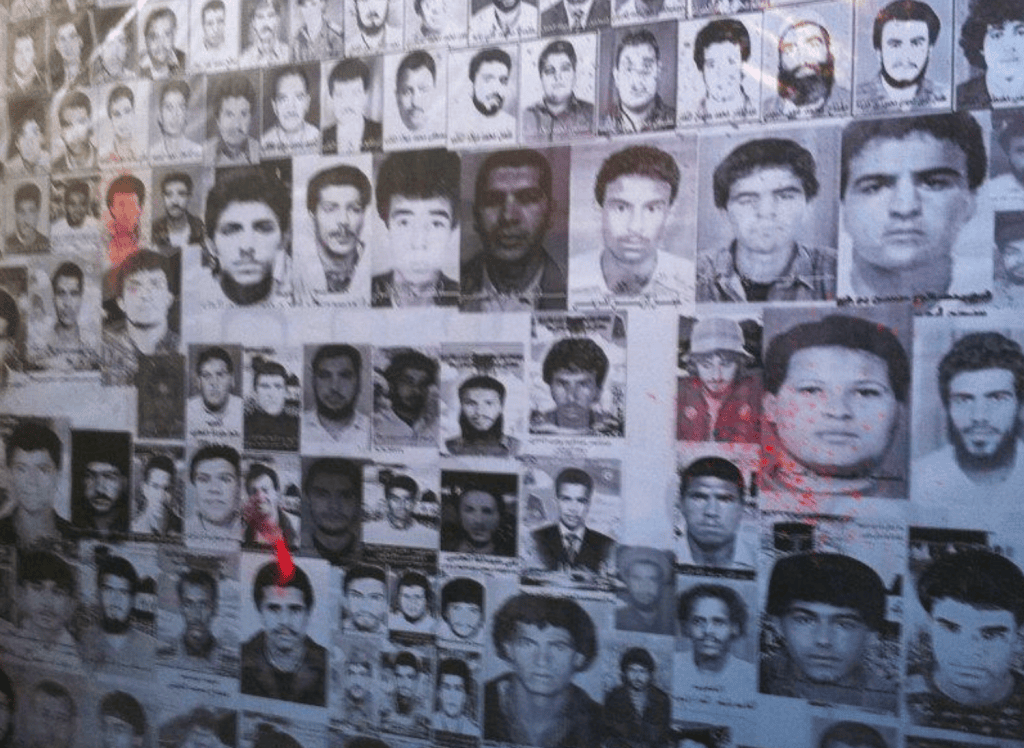
During Seif Al Islam’s U.S. visit, families of almost 1,200 political prisoners at Abu Sleim prison, who perished in a notorious massacre in 1996, organized public protests demanding to know what happened to their loved ones. To date, the families of Dr. Mansur Al Kekhia, Izzat Al Magariaf and Jaballah Matar, all prominent dissidents who were kidnapped by Libyan agents from Cairo and taken to Libya, know nothing about their whereabouts.
The needless and tragic loss of life in Libya in the name of the revolution is the responsibility of Qadhafi and his family. Unless these issues are resolved with complete acknowledgement of responsibility, the power transfer to Seif Al Islam will continue to be viewed by Libyans as illegitimate and usurped.
The Bush administration wasted a real opportunity to effect change in Libya, and thus undermined its credibility in the eyes of the Libyan street.
As for the newly appointed administration of president-elect Barak Obama, it is my hope as a Libyan American that it will make human rights a cornerstone of its policy toward this troubled country.

